
Introduction
Global climate change driven by global warming has already adversely impacted natural ecosystems and socio-economic systems worldwide. Minimizing our environmental footprint has become a collective, critical imperative for the international community. Concurrently, with the continuous surge in IT and AI computing demands, multi-core CPUs, high-density servers, and core switches are being deployed on a massive scale. Consequently, engineered thermal solutions that ensure equipment reliability have become the cornerstone of modern IT infrastructure. As a dedicated global citizen and a professional IT infrastructure provider, Aiworld Technology Co., Ltd. places the utmost priority on energy conservation and environmental sustainability. We seamlessly integrate ESG (Environmental, Social, and Governance) core values into our proprietary aluminum-magnesium alloy material advantages, physical aisle containment, and precision cabinet airflow management. From low-carbon sourcing to granular airflow optimization, we empower enterprises to construct low-energy, high-efficiency, next-generation green data centers
Environmental Sustainability (E): Upstream Decarbonization Advantages
The main cabinet structures and the framework profiles of our aisle containment engineering are predominantly crafted from high-quality aluminum-magnesium alloys. By intervening at the very inception of the product lifecycle, we proactively fulfill our environmental responsibilities:
Non-Toxic & High Recyclability
The material contains no heavy metals such as lead or cadmium, ensuring zero contamination to environment and ecosystems. Furthermore, aluminum features a lower melting point, significantly mitigating environmental impact during reclamation and alignment with circular economy principles.
Low-Carbon Transportation & Green Deployment
The lightweight inherent property of the cabinet and aisle framework profiles ensures exceptional ease of transport, handling, and on-site assembly, materially reducing logistics-associated energy consumption and carbon emissions.
Low-Pollution Modular Manufacturing
Utilizing a fully modular structural profile design eliminates most welding processes typically required by traditional steel cabinets or heavy steel structures during processing and field installation, drastically cutting down manufacturing-induced pollution and maximizing workspace safety.
Inherent Thermal Conductive Advantages
Compared to steel, aluminum possesses superior thermal, electrical, and magnetic conductivity. In identical high-density computing environments, its superior thermal conductivity, coupled with the integrated channel architecture, delivers enhanced natural heat dissipation. It also effectively dissipates equipment static charge and electromagnetic interference (EMI), safeguarding the operational stability of mission-critical hardware.
Energy Reduction (E) & Operational Governance (G): Precision Airflow Engineering
Building upon the exceptional foundation established by our aluminum-magnesium alloy cabinets, we implement rigorous airflow tuning across three core pillars via physical aisle containment and micro-airflow calibration. This enables enterprises to surpass energy-efficiency benchmarks and comply with stringent regulatory PUE (Power Usage Effectiveness) metrics mandated by governments and global supply chains:
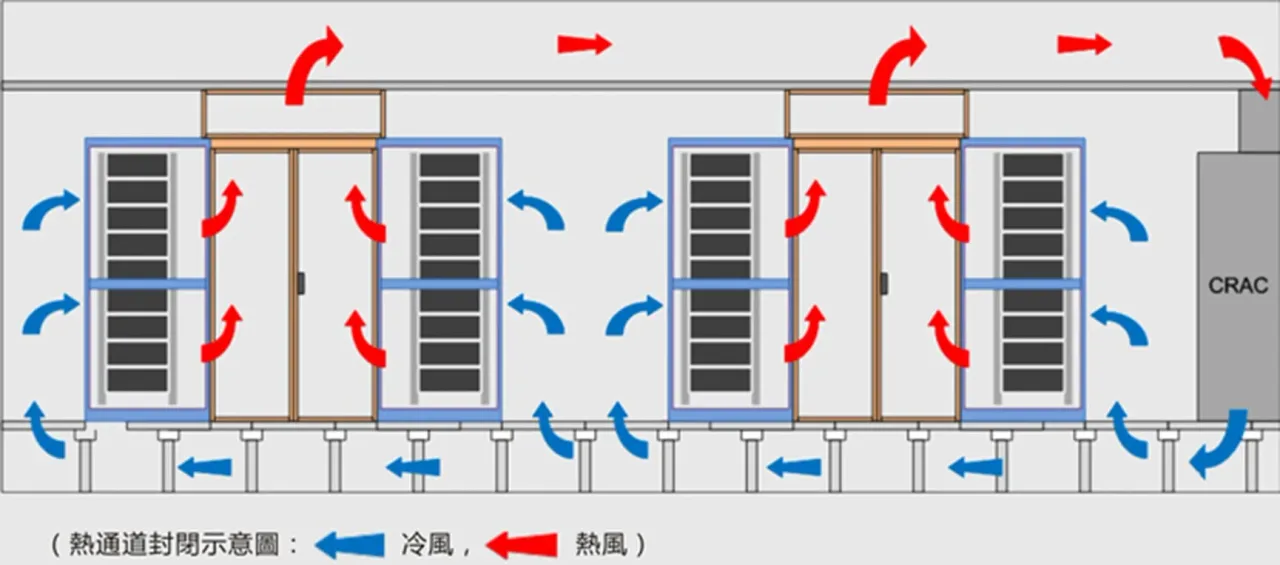
Hot/Cold Aisle Containment
Utilizing high-strength aluminum alloy framework structures paired with high-translucency, safety-rated polycarbonate (PC) hollow-sheet sliding doors and top ceiling panels, we establish an absolute physical enclosure of the hot or cold aisles to maximize cooling infrastructure's operational efficiency.
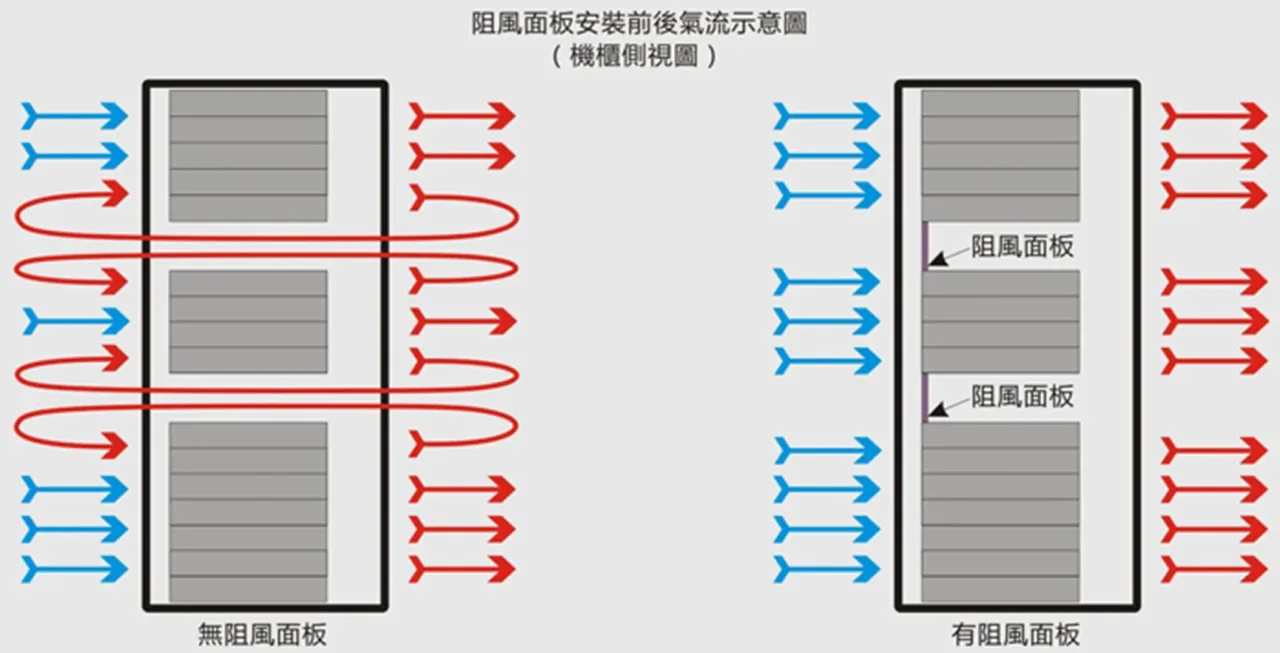
Elimination of Intra-Cabinet Thermal Recirculation
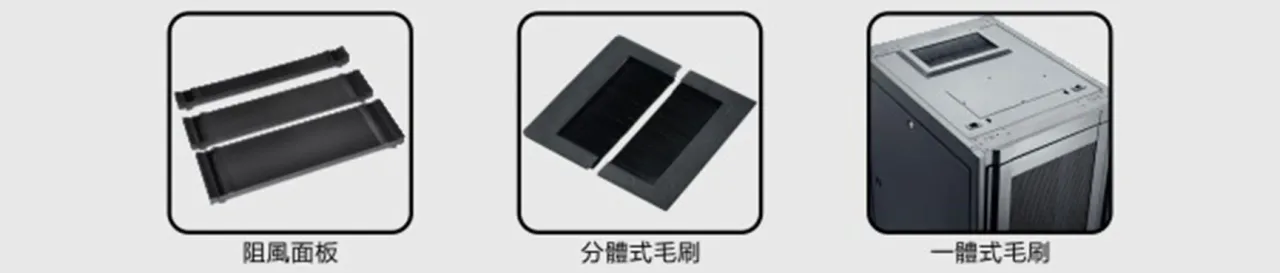
For unpopulated or partially utilized cabinet spaces, we deploy meticulous anti-recirculation mechanisms such as blanking panels, side airflow brush strips, and top cable entry brush gaskets to halt inefficient short-cycling.
Mitigating Cold Air By-pass & Ensuring Adequate Airflow
Eliminate cold/hot air mixing by sealing extraneous raised floor openings and optimizing under-floor routing paths to prevent excessive cable congestion from creating high airflow resistance, ensuring optimal volumetric delivery.
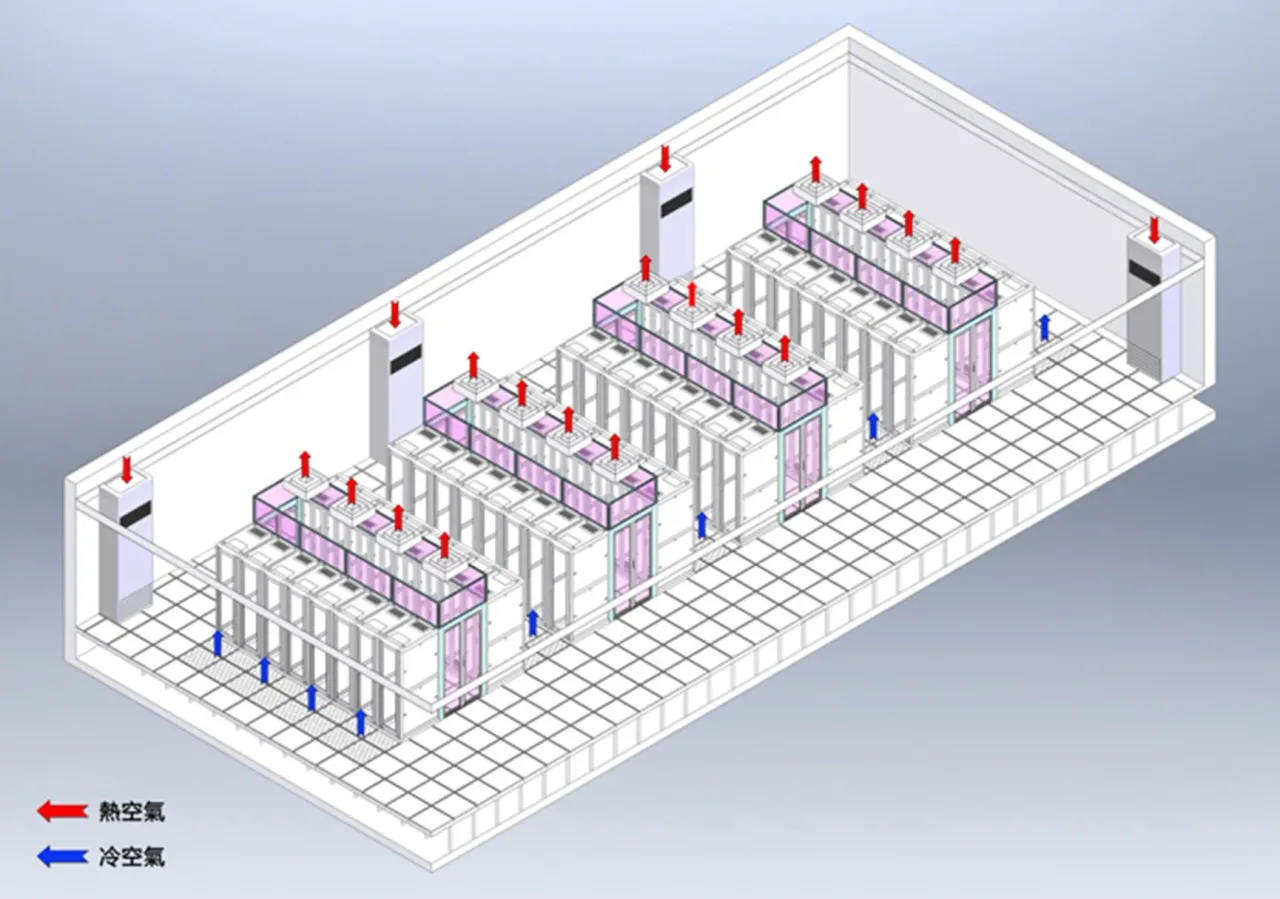
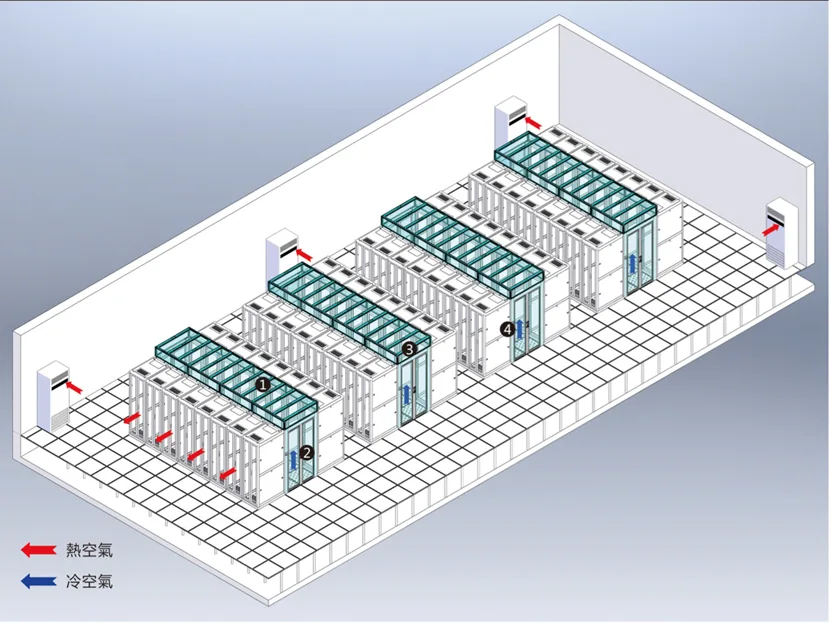
Hot Aisle Containment Diagram / Architectural Overview
- Enclosed Hot Air Zone: Encloses the hot air zone between two adjacent rows of cabinets, or between a single row of cabinets and the wall, effectively preventing the waste of cold air and the mixing of hot and cold air.
- Auto-Return Sliding Side Doors: Constructed from tempered glass with an anti-pinch safety design. Equipped with a touch-to-exit access control switch as standard; clients can choose between keypad password or magnetic card access control systems.
- Environmental Monitoring System Integration: Fully compatible and integrated into the data center's overarching central Environment Management System (EMS).
- Top Ceiling Containment Module: Features a modular design engineered for rapid on-site installation and effortless expansion. The structure is robust yet lightweight, delivering a high light transmittance rate of over 80%.
Cold Aisle Containment Diagram / Architectural Overview
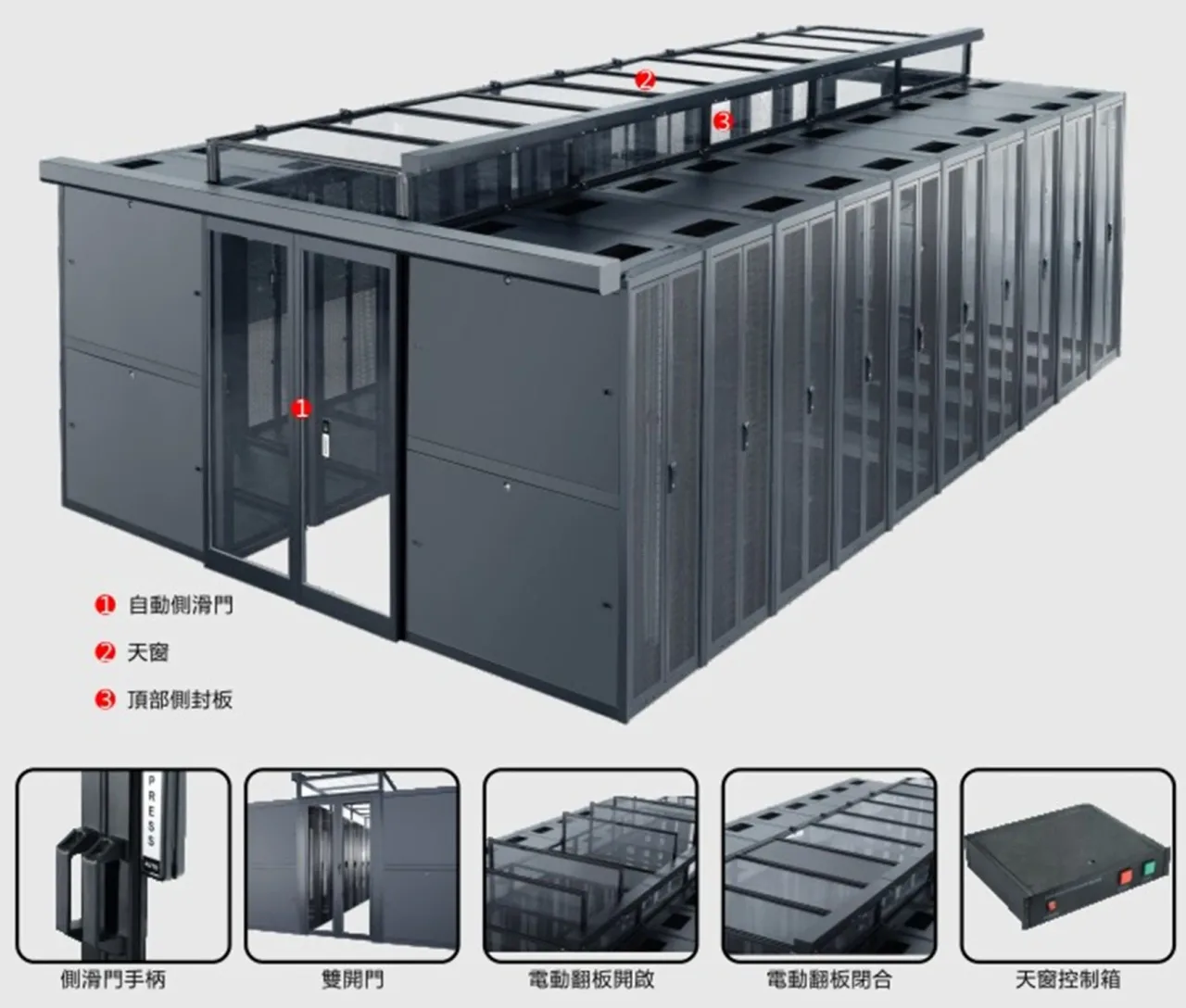
- Enclosed Cold Air Zone: Encloses the cold air zone to enhance CRAC/CRAH cooling efficiency, effectively preventing the waste of cold air and the mixing of hot and cold air.
- Automated Sliding Side Doors: Constructed from tempered glass with an anti-pinch safety design and multiple access control options.
- Environmental Monitoring System Integration: Fully compatible and integrated into the data center's overarching central Environment Management System (EMS).
- Top Ceiling Containment Module: Consists of top/side blanking panels and automated ceiling modules delivering a high light transmittance rate of over 80%.
- Accessory Customization: Clients can retrofit various fire safety and security accessories onto the fixed ceiling panels based on deployment needs, including surveillance cameras, temperature/humidity sensors, and smoke detectors.
Ceiling Control Box
Installed within the cabinet, this unit integrates the data center's fire alarm or Environmental Monitoring System (EMS) signals into the control box. Upon receiving an alarm signal, the motorized ceiling panels automatically flip downward by 180°C to open. Once the alarm is cleared, facility administrators can reset the motorized ceiling panels with a single-button operation via the control box. Clients can also retrofit integrated lighting fixtures within the cold aisle.
Operation and Demonstration
Hot Aisle Containment Architecture
Eliminating hot/cold air bypass via physical hot aisle containment
Field Implementation & Operational Showcase
Watch our expert team’s construction journey and the ultimate energy-efficiency outcomes
Core Solution Benefits: A Comprehensive Fulfillment of ESG Commitments
Environmental (Sustainability)
By combining the natural thermal conductivity of aluminum-magnesium alloys with physical aisle containment and multi-layered cabinet seals, we completely eliminate localized hotspots. This minimizes unmanaged cooling loss, delivering substantial energy savings and a reduced carbon footprint for our clients.
Social (Responsibility & Safety)
Features seamless integration between the containment ceiling matrix and the data center’s fire suppression systems. Combined with zero-heavy-metal composition, our engineering safeguards the physical health and on-site operational safety of data center technicians.
Governance (Compliance & Value)
Facilitates green data center compliance through pragmatic, highly effective engineering methodologies that optimize facility PUE. This allows enterprises to smoothly align with global supply chain carbon audits and international standards for corporate Sustainability and ESG Reporting.